
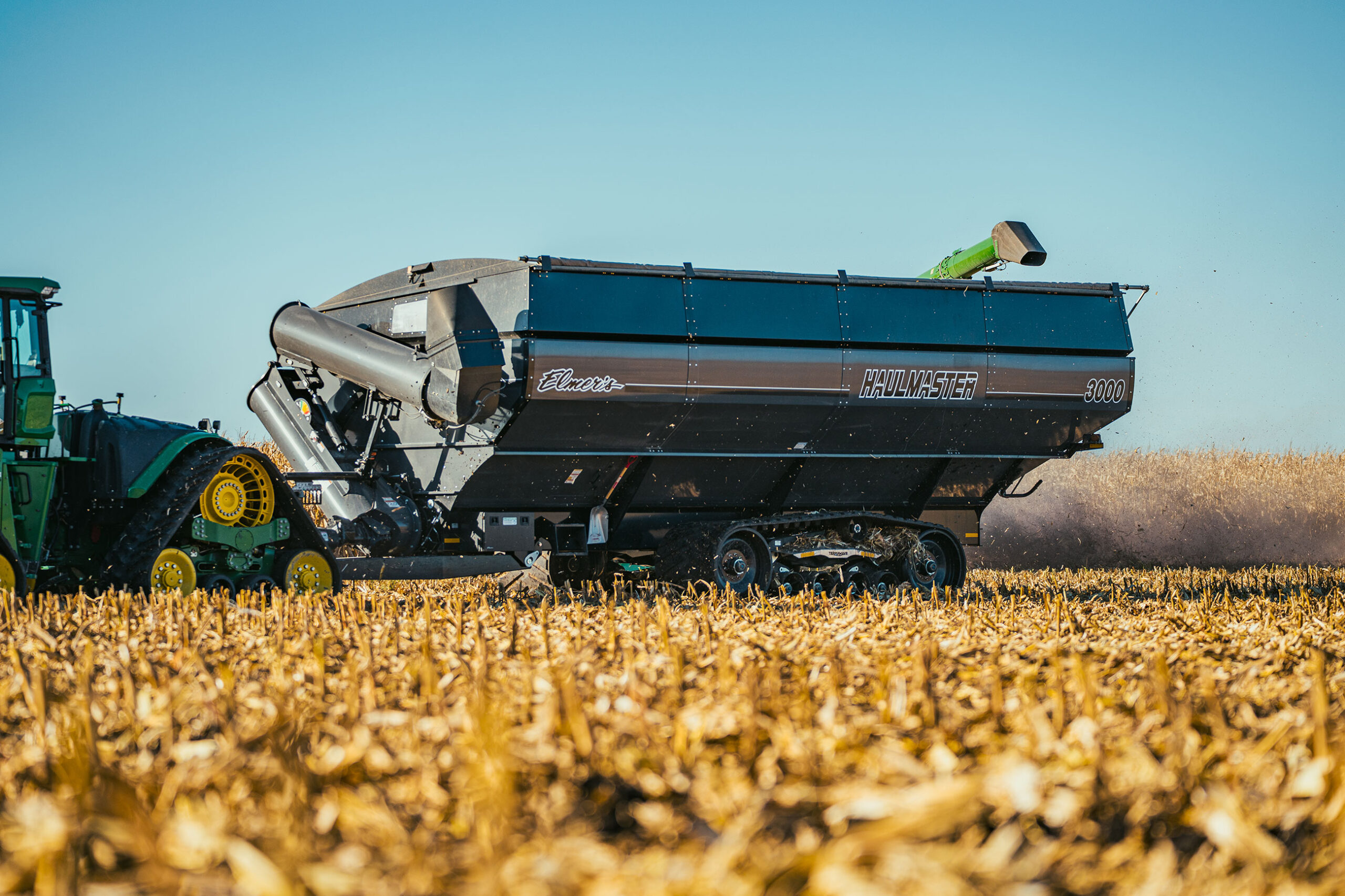
A few years ago, Elmer’s Manufacturing decided to add a moisture sensor to the company’s line of grain carts. The Canadian equipment manufacturer, known for its high-quality HaulMaster grain carts and the high-capacity Hive Motherbin, knew that their customers wanted to track moisture carefully throughout the harvest.
“There are several different reasons for this,” says Christian Gruenke, Field Support & Testing Coordinator at Elmer’s. “Some of it has to do with meeting contract specifications, but a lot of it is based on common sense grain handling — making harvest as efficient as possible and avoiding spoilage in storage.”
In particular, accurate moisture data during harvest can help farmers and operators answer important questions in real time and avoid production bottlenecks:
- Where should I send a particular load?
- What’s the best way to manage the grain before storage or sale?
Identifying the most important moisture sensor capabilities
“When we started to look for a suitable moisture sensor for our grain carts, we identified three key capabilities that mattered the most to us,” recalls Christian Gruenke.
These were:
- The ability to calibrate the sensor readings to match a customer’s own moisture tester
- Easy integration with Elmer’s cloud-based HaulMaster Connect platform so moisture could be logged against each unload
- A straight-forward mounting process on the grain carts, including for retrofit installations
Testing the sensor and finding its location
Elmer’s went through a rigorous process of evaluating and testing suitable products. The tests were carried out in two stages: first on a grain-recirculation test stand in the shop, then in the field on prototype grain carts.
“We checked sensor readings against bench moisture tests using samples from multiple crops, including wheat, corn, barley, soybeans, and canola,” explains Christian Gruenke.
“The variables in our tests were crop type, moisture level, and power take-off (PTO) speed. We found that the FarmTRX Moisture Sensor was very accurate once it had been calibrated.”
Mounting position on the grain cart was also a key part of the investigation.
“We cut three different openings on the auger during the trials and compared grain flow and sensor data at each location,” Christian Gruenke continues.
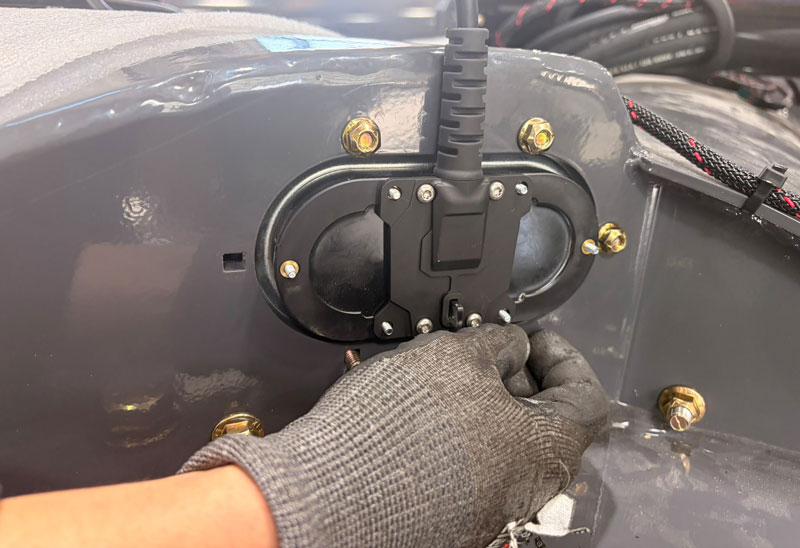
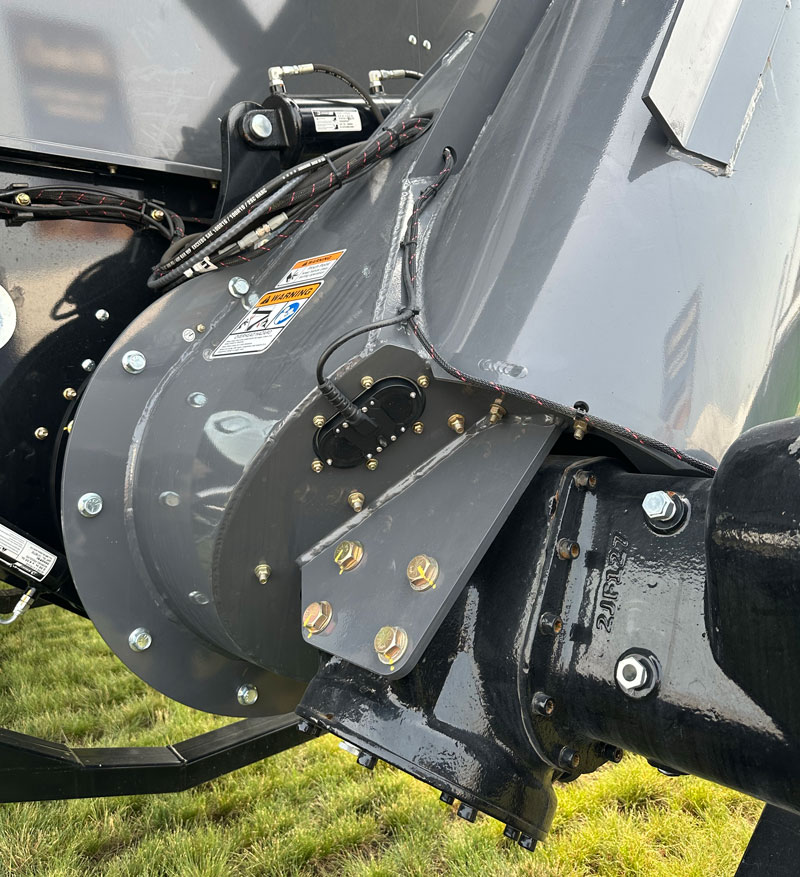
A suitable mounting location must expose the sensing face to representative grain flow. Testing in real-world operating conditions helps engineers understand how the complete installation behaves, rather than assessing the sensor in isolation.
In the end, Elmer’s chose to install the FarmTRX Moisture Sensor at the bottom of the unload auger as it offered the best combination of consistent grain flow and ease of installation.
Why a flat ceramic sensing face matters
The FarmTRX Moisture Sensor measures changes in an electric field as grain passes over its face, with crop-specific relationships used to determine moisture content. It has no moving parts and combines a rugged ceramic sensing surface with a stainless-steel mounting flange.
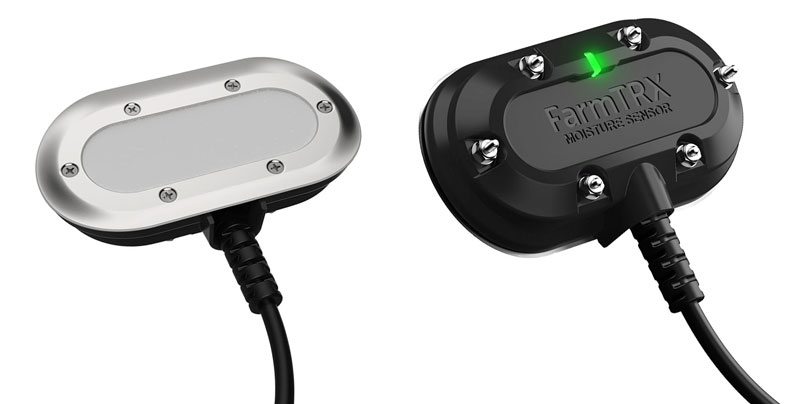
Many moisture sensors use a blade or fin that reaches into the grain stream. The FarmTRX sensor was designed from the start for mounting in combines, with a flat sensing face that sits flush with the inside wall. That same design turned out to be a natural fit for the bottom of a grain cart’s unload auger.
“Because the face sits flush, it doesn’t interfere with the flighting or the grain flow,” says Braden Wyatt, Director of Operations at FarmTRX. “That meant Elmer’s could put it where the grain flow was best, not just wherever there was room for it. And the ceramic face is tough. It’s designed for heavy abrasion, so it handles grain season after season.”
That durability doesn’t come at the expense of accuracy. In Elmer’s testing across different crops, moisture levels and PTO speeds, the sensor delivered accurate, repeatable readings once calibrated against bench moisture tests.
The sensor also communicates over CAN, which made it straightforward to build into Elmer’s Connect platform.
Putting moisture into the unload workflow
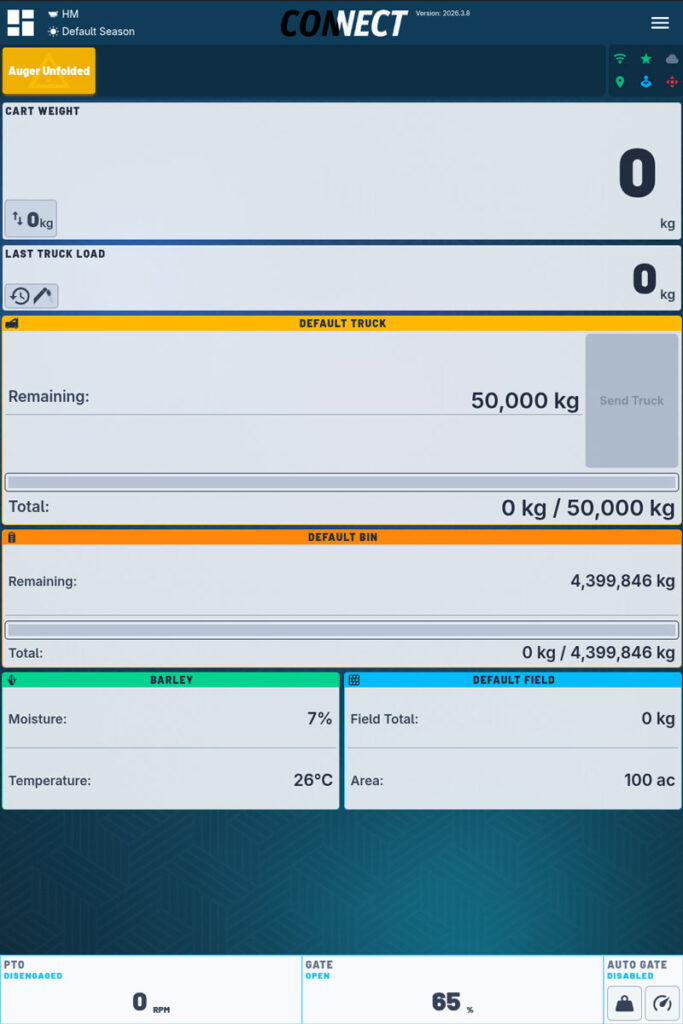
Within Elmer’s HaulMaster Connect app, live moisture appears on the crop tile on the home page. During unloading, the operator can consult the reading when deciding where the grain should go. When unloading finishes, the average moisture is saved with the unload record. Customers can review it on the cart tablet or in the cloud, building a record across loads to support storage and marketing decisions.
“We worked closely with the Elmer’s team and developed a few custom CAN-based parameters for the Moisture Sensor that were needed to facilitate the integration of the device into the Connect ecosystem,” recalls Braden Wyatt.
Christian Gruenke also offers a useful perspective on adoption: “Many of our customers already have moisture data readings from their combine, but even to them the cart measurement provides a valuable second data point for validation.”
The tempo is high during harvest and having two independent moisture readings gives operators confidence and peace of mind when determining where to unload each load.
A foundation for further automation
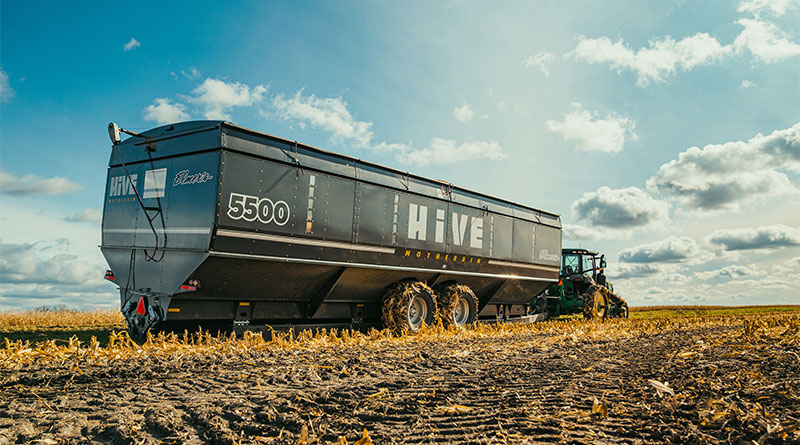
Elmer’s Manufacturing sees growing expectations for sensor options on grain-handling equipment, even if many farmers don’t know exactly how they’re going to use that data yet.
“Over the next few years, we expect moisture information to support automation, including automatically storing and blending wetter and drier grain to improve profits,” says Christian Gruenke.
Braden Wyatt from FarmTRX concludes: “We couldn’t be happier with our collaboration with Elmer’s Manufacturing. This integration shows that our Moisture Sensor is an ideal candidate for demanding OEM installations that require fine-tuned calibration, custom software integration, and easy mounting.”


